
REDs: How a Sports Dietitian Can Help
What is Relative Energy Deficiency in Sport (REDs)?
Relative Energy Deficiency in Sport (REDs) is a medical condition that occurs when an athlete does not eat enough to support their training demands.
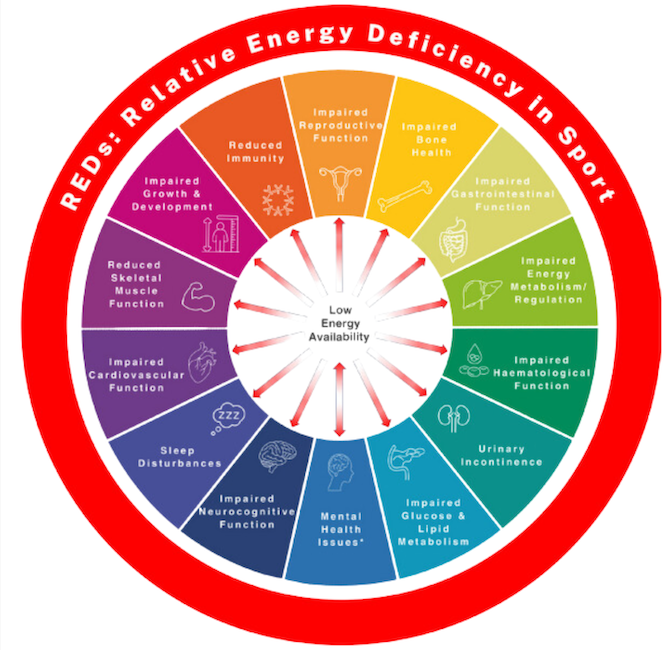
This state of under-fueling — known as low energy availability — impacts nearly every system in the body. REDs can affect athletes of all genders, ages, body sizes, and competitive levels.
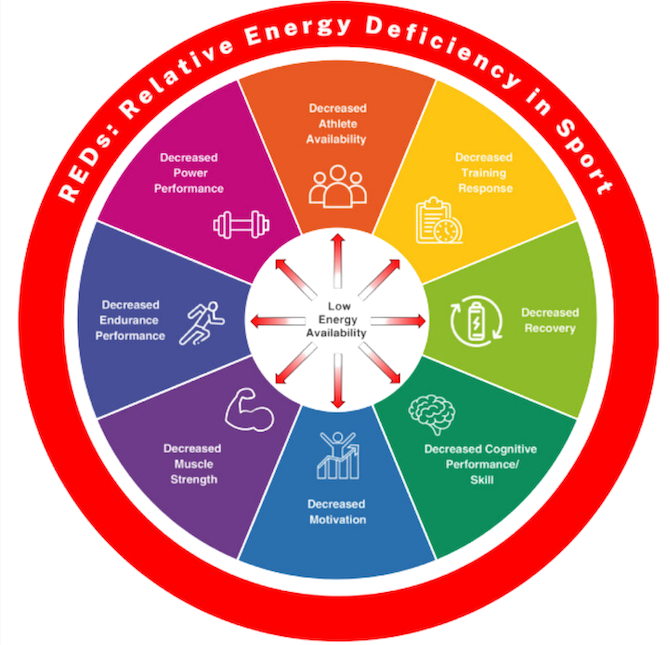
Without treatment, REDs can impair health, recovery, hormonal function, bone density, and athletic performance.
Why a Sports Dietitian Is Essential for REDs Recovery
A sports dietitian plays a central role in diagnosing and treating REDs. They assess an athlete’s nutrition intake, compare it to estimated energy needs, and create a plan to restore adequate fueling.
Low energy availability is the root cause of REDs — and correcting it requires precision, education, and individualized care.
Here’s how a sports dietitian helps:
1. Evaluating Energy Intake vs. Training Demands
A sports dietitian analyzes what an athlete typically eats in a day and estimates total calorie and nutrient intake. Using evidence-based equations, they determine how much energy the athlete actually needs based on training volume and intensity.
These numbers are compared to calculate what percentage of energy needs are being met.
At KC Performance Nutrition, we commonly see athletes consuming less than 75% of their estimated needs — sometimes far less — even before a formal REDs diagnosis.
2. Creating a Personalized Fueling Plan
Recovering from REDs requires consistent, structured fueling.
Most athletes need:
- Three meals
- Two to three snacks
- Fueling every 3-4 hours
Each fueling plan is individualized based on sport, schedule, age, preferences, and training load. The goal is to restore adequate energy availability while supporting performance.
3. Assessing Growth, Weight History, and the Need for Weight Restoration
Chronic under-fueling may lead to:
- Unintentional weight loss
- Delayed growth in adolescents
- Weight suppression
- Stunted height progression
For athletes under 23, growth charts are reviewed when available. For adults, a comprehensive weight history is gathered.
Although KC Performance Nutrition follows a Health at Every Size approach, medically necessary weight restoration may be required to reverse complications such as:
- Low heart rate (below 50 bpm)
- Low blood pressure (below 100/70)
- Low blood sugar (below 70)
- Poor bone density (t- or z-score below -1.0 on a DEXA scan)
- Increased injury risk
KCPN dietitians do not prescribe weight loss or promote weight manipulation. However, weight restoration is addressed when essential for recovery from REDs.
4. Screening for Disordered Eating and Eating Disorders
Many athletes with REDs also struggle with disordered eating behaviors.
Sports dietitians screen for eating disorder risk and determine whether specialized treatment is needed. When appropriate, referrals are made to physicians and mental health providers.
Sara Arnold, founder of KC Performance Nutrition, is a Certified Eating Disorders Specialist (CEDS) and provides nutrition intervention for:
- Anorexia Nervosa
- Bulimia Nervosa
- Orthorexia Nervosa
- Binge Eating Disorder
- Avoidant/Restrictive Food Intake Disorder (ARFID)
All KC Performance Nutrition sports dietitians are trained to support athletes experiencing disordered eating. Read more about our disordered eating services here.
Eating disorder nutrition treatment helps athletes:
- Restore adequate energy intake
- Correct nutrient deficiencies (iron, calcium, vitamin D, vitamin B12)
- Challenge diet culture in sport
- Rebuild trust with food and their bodies
Treatment for an eating disorder often requires an interdisciplinary team. KCPN dietitians collaborate closely with physicians and therapists throughout treatment.
5. Determining Whether Training Is Safe During Recovery
When an athlete is significantly under-fueling, continued high-intensity training may be unsafe.
Low energy availability can lead to:
- Bradycardia (heart rate below 50 bpm unrelated to conditioning)
- Impaired blood glucose regulation
- Reduced bone density
- Increased fracture risk
KCPN dietitians use guidance from Safe Exercise at Every Stage (SEES) to determine whether training levels are appropriate during REDs recovery.
6. Preventing REDs Recurrence
REDs recovery does not end when symptoms improve.
Athletes must learn to:
- Maintain consistent fueling habits
- Adjust nutrition during heavy training cycles
- Recognize early warning signs of low energy availability
Preventative education is critical for long-term health and performance longevity.
REDs Is Serious — But Treatable
With appropriate nutrition intervention, athletes can restore hormonal function, bone health, energy levels, and performance.
At KC Performance Nutrition, our sports dietitians specialize in REDs recovery through individualized, evidence-based fueling strategies.
Fueling is not optional. It is foundational to athletic health and success.
If you suspect REDs — or want to ensure your nutrition supports your training — working with a sports dietitian is a critical first step.
Frequently Asked Questions About REDs
What are early signs of REDs?
Early symptoms may include:
- Fatigue
- Frequent injuries (especially stress fractures)
- Decreased performance
- Mood changes
- Irregular or absent menstrual cycles
- Low libido or loss of morning erections in males
- Iron deficiency
- Poor recovery between training sessions
Symptoms can be subtle at first. Early evaluation improves outcomes.
Can male athletes develop REDs?
Yes. REDs affects athletes of all genders. In males, symptoms may include low testosterone, low libido, or loss of morning erections.
How long does REDs recovery take?
Recovery time depends on severity and duration. Energy levels may improve within days of adequate fueling. Hormonal recovery and bone density restoration may take months to years.
Can you recover from REDs without gaining weight?
Sometimes.
Not all under-fueling results in weight loss or suppression. Some athletes may experience weight gain due to metabolic adaptation. When refeeding, athletes often find that their weight fluctuates as they improve their energy availability. A sports dietitian can assess individual needs and guide appropriate care.
Work With a Sports Dietitian
If you are an athlete, parent, coach, or healthcare provider and suspect REDs, early intervention matters.
KC Performance Nutrition provides virtual sports nutrition counseling throughout many states across the country.
Schedule an appointment with a sports dietitian today to ensure fueling supports both health and performance.